

Running Through History: Landmarks You’ll Pass on the Austin Marathon Course
You’ll have plenty to watch on race day: your pace, the next hill, and the friend cheering from the sidewalk. Leave a little room for Austin, too.
Austin Marathon course landmarks include Lady Bird Lake, South Congress Avenue, the “i love you so much” mural, and the UT Tower. The route also features historic Hyde Park and a finish on Congress Avenue near the Texas State Capitol.
Some of these places have been part of Austin for generations. Others became local favorites much more recently. Here’s the history worth knowing before you line up.
 Congress Avenue: Your Starting Line in Downtown Austin
 Congress Avenue: Your Starting Line in Downtown Austin
Your race begins at 2nd Street and Congress Avenue, on a street that dates to Austin’s original 1839 city plan.
Congress has long connected the riverfront with the Capitol, serving as a setting for businesses, public gatherings, and celebrations. On race morning, runners take over the scene.
Before the start, take a look around. The older downtown buildings and newer towers show just how much Austin has grown around this historic avenue. Then settle into your pace. There’s plenty more city ahead.
Lady Bird Lake: From Town Lake to a Runner’s Favorite
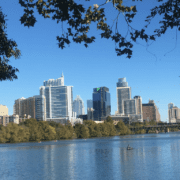 Lady Bird Lake: From Town Lake to a Runner’s Favorite
Lady Bird Lake became part of Austin’s landscape in 1960, when the completion of Longhorn Dam created the reservoir on the Colorado River.
Originally called Town Lake, it was renamed in 2007 to honor Lady Bird Johnson. Her work helped beautify the shoreline and develop the trail system that makes the lake such a familiar place for Austin runners.
That connection gives this course landmark extra meaning. Long before race morning, the lake’s surrounding trails have been the setting for training runs, first miles, and long-run conversations.
If you trained here, this part of the city will already feel familiar. If you’re visiting, put a lakeside walk on your list for another day.
South Congress: Roadside Roots and Live Music
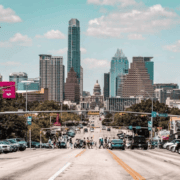 South Congress: Roadside Roots and Live Music
South Congress wasn’t always a shopping-and-dining destination. During the 20th century, motor courts, diners, and small businesses served travelers along the road south of downtown.
Its music history runs deep, too. The Continental Club opened in 1955 as a supper club before becoming a fixture of Austin’s live-music scene.
Today, South Congress mixes longtime businesses with newer storefronts. Running along the avenue gives you a street-level look at that changing neighborhood, without having to hunt for parking.
The hills still deserve your attention. So does the place you’re running through.
The “i love you so much” Mural: Five Words That Became an Austin Landmark
 The “i love you so much” Mural: Five Words That Became an Austin Landmark
At Jo’s Coffee on South Congress, a short message became one of the city’s best-known photo spots.
Musician Amy Cook painted “i love you so much” in 2010 for her partner, Liz Lambert, who owned Jo’s at the time. The words on the green wall have since become a familiar stop for Austin visitors.
It’s a small landmark with a specific, personal beginning. And with the 2027 Austin Marathon falling on Valentine’s Day, the message fits race weekend especially well.
Enjoy spotting it as you run. Save the posed photo for a return visit so fellow runners have room to keep moving.
The UT Tower: Austin’s University History Above the Streets
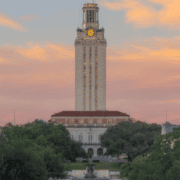 The UT Tower: Austin’s University History Above the Streets
The University of Texas at Austin opened in 1883. Its tower, completed in 1937, became one of the university’s most recognizable symbols.
For generations of students and alumni, the tower has marked a place of study, celebration, and tradition. For runners visiting Austin, it’s a reminder of how closely the university and the city are connected.
The UT Tower is among the landmarks highlighted in the Austin Marathon’s official course overview. Look for it in the skyline rather than expecting the race to take you to its entrance.
Hyde Park: An Early Austin Suburb
 Hyde Park: An Early Austin Suburb
Hyde Park developed in the 1890s, when streetcar service connected the neighborhood with downtown Austin.
What was once a suburb is now part of central Austin. Its Victorian and Craftsman homes preserve a different view of the city from the commercial streets and downtown towers.
This is neighborhood history, not a single monument. As you run through Hyde Park, the residential streets and older architecture are the sights.
They’re also a reminder that the marathon takes place through people’s hometown, not just a visitor’s checklist.
The Texas State Capitol: History at the Finish
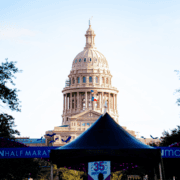 The Texas State Capitol: History at the Finish
Completed in 1888, the Texas State Capitol is one of Austin’s defining landmarks. Its red-granite exterior and dome make it easy to recognize.
For marathon runners, it also means the finish is close.
The Austin Marathon finishes at 9th Street and Congress Avenue, near the Capitol, rather than inside the Capitol grounds. After 26.2 miles, you probably won’t be thinking much about architectural history. Fair enough.
But when you look back at your finish-line photos, you’ll have a distinctly Austin backdrop to go with that medal.
Austin Marathon Course FAQs
What historic landmarks will I see along the Austin Marathon route?
The official event overview highlights Lady Bird Lake, South Congress, the “i love you so much” mural, and the UT Tower. The route also includes Hyde Park and finishes near the Texas State Capitol. Check the latest course map for race-year routing.
Where does the Austin Marathon start and finish?
The published course information places the start at 2nd Street and Congress Avenue and the finish at 9th Street and Congress Avenue in downtown Austin.
Will half marathon runners see all the same landmarks?
No. The marathon and half marathon share part of the route, then split after mile 12. Check the map for your distance before planning which landmarks you’ll see.
Run Austin on February 14, 2027
Come for the 26.2. Notice the music venues, neighborhood streets, and landmarks along the way.
Before race weekend, review the official Austin Marathon course map for the latest route details.
Ready to join us? Register for the 2027 Ascension Seton Austin Marathon and we’ll see you on Congress Avenue.


