
The Most Underrated Skill in Marathon Training: Patience
When people talk about marathon training, they usually focus on the obvious stuff: long runs, speed workouts, strength training, nutrition, and the right shoes.
All of that matters.
But if there is one skill that quietly determines whether your training builds you up or burns you out, it is patience.
Patience is what keeps you consistent when progress feels slow. It is what stops you from turning every run into a race. It is what helps you trust the process when you are preparing for something as big as the Austin Marathon.
Because marathon fitness is not built in a weekend, and it is not built by “cramming.” It is built by showing up, week after week, and letting time do its job.
 Why patience matters more than motivation
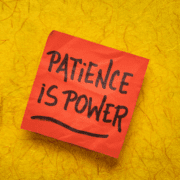 Why patience matters more than motivation
Motivation is great, but it is unreliable. Some days you feel unstoppable. Other days you feel tired, busy, stressed, or simply not in the mood.
Patience is different. Patience is the decision to train like someone who wants to be running, healthy, and improving not just this week, but for months and years.
In marathon training, patience shows up in small moments:
- Running easy when your plan says easy (even if you feel like pushing it)
- Stopping a workout when something feels off instead of “powering through”
- Accepting that some weeks will be messy, and still returning to the plan
- Building gradually instead of trying to prove something on every run
Patience is what turns training from a series of hard efforts into an actual build.
The common trap: “If I can do more, I should do more”
 The common trap: “If I can do more, I should do more”
This is one of the biggest mistakes runners make, especially early in training:
You feel good, so you add miles. You add intensity. You stack hard days. You chase faster paces.
It makes sense in the moment. You feel capable, and capability is exciting.
But marathon training is not only about what you can do today. It is about what you can repeat safely and consistently for weeks.
A few extra miles might not hurt you today, but too many “just a little extra” decisions can quietly push you toward:
- lingering fatigue
- nagging injuries
- inconsistent training
- burnout halfway through the plan
Patience is understanding that your best training is the training you can actually sustain.
Fitness is built in the easy miles
 Fitness is built in the easy miles
A lot of runners underestimate easy running because it does not feel like much is happening.
But easy miles are where your aerobic engine grows. They are where your connective tissue adapts. They are where you learn to run relaxed, fuel well, and recover properly.
Think of it this way: the hard workouts are the spark, but the easy running is the fuel.
Patience means being willing to run at a pace that feels almost too easy, because you trust the long game. It also means remembering that “easy” is not a specific pace on someone else’s watch. It is the effort level that lets you recover and come back tomorrow.
If you want to show up strong on race day, do not rush the foundation.
Patience is how you avoid injury (and still get faster)
 Patience is how you avoid injury (and still get faster)
Most injuries are not caused by one bad run. They are caused by accumulation: too much intensity, too much volume, not enough recovery, and not enough time for your body to adapt.
Patience is what keeps your training balanced.
It looks like:
- Taking recovery days seriously
- Respecting cutback weeks
- Prioritizing sleep when training volume increases
- Strength training consistently, even when you would rather “just run”
- Listening to early warning signs instead of waiting for pain to become a problem
The irony is that patience often leads to faster progress. When you avoid injuries and train consistently, you get the thing most runners are really chasing: momentum.
What patience looks like during the hardest part of a training cycle
 What patience looks like during the hardest part of a training cycle
Every marathon build has a stretch where you feel the weight of it. Long runs get longer. The schedule gets real. Life still happens.
This is where patience becomes a superpower.
Instead of thinking, “I have to crush this week,” patient runners think:
- “I just need to complete it.”
- “I need to be smart so I can keep going.”
- “One run is not the whole plan.”
- “Consistency beats heroics.”
If you miss a run or have a rough week, patience helps you respond without panic. You do not try to “make up” workouts by doubling up or pushing too hard. You simply return to the plan.
That calm reset is often what separates a strong finish from a late-cycle collapse.
Race-day patience: the skill that decides your finish
 Race-day patience: the skill that decides your finish
Even runners who train patiently sometimes forget patience on race day, especially in the first few miles when adrenaline is high and the crowd energy is contagious.
Austin Marathon will give you plenty to be excited about. The atmosphere, the people, the start line nerves, the sense that you are finally here.
Patience on race day means:
- Starting slower than you want to, not slower than you can
- Letting other runners go, especially early
- Settling into your rhythm and protecting your energy
- Fueling early and consistently, not “when you feel like you need it”
- Staying calm when the race gets tough, because it will
A marathon is a long conversation with your body. The runners who finish strong usually are not the ones who attacked the first half. They are the ones who respected it.
How to build patience into your training (practical tips)
 How to build patience into your training (practical tips)
If patience does not come naturally to you, that is normal. The good news is you can train it, just like you train endurance.
Here are a few ways to practice:
- Use effort, not ego, to guide pace.
- Easy days should feel easy. If you can talk in full sentences, you are probably in the right zone.
- Treat recovery as training.
- Recovery runs and rest days are not “lost time.” They are the reason you can handle the next quality workout.
- Keep a training log and zoom out.
- Progress is easier to see when you look at 4 to 6 weeks, not 4 to 6 days.
- Follow the plan you have, not the plan you wish you had.
- A realistic plan executed consistently beats the perfect plan you cannot maintain.
- Remember why you are training.
- The goal is not to win Tuesday’s run. The goal is to show up on race day healthy, confident, and ready.
The quiet truth about marathon training
 The quiet truth about marathon training
Marathon training rewards the runner who can delay gratification.
It rewards the runner who can run easy when it is easy, push when it is time to push, and step back when stepping back is the smart move.
If you can master patience, you will do more than finish your plan. You will build the kind of fitness that lasts.
So as you train for the Austin Marathon, keep this in mind:
Patience is not passive. It is a skill. It is discipline. It is confidence in the long game.
And it might be the most underrated tool you have.
Training for Austin Marathon this year? Save this post, share it with your running buddy, and keep showing up. One patient week at a time.
 What “building a base” actually means
 1) Run consistently (frequency matters more than one big run)
 2) Build weekly mileage gradually
 3) Keep most runs easy (easy pace is the secret weapon)
 4) Extend the long run, but do not rush it
 5) Add strength and mobility (light, consistent, and runner-focused)
 How many miles should you run before starting marathon training?
 Sample 8-week base building plan (simple and sustainable)
 Common base-building mistakes (and how to avoid them)
 Austin Marathon specific tips for your base phase
 1. Downtown Austin
 2. South Congress (SoCo)
 3. Travis Heights & South Austin
 4. Hyde Park & The University of Texas
 5. Allandale & Shoal Creek
 6. Clarksville & Old West Austin
 7. The Home Stretch

