
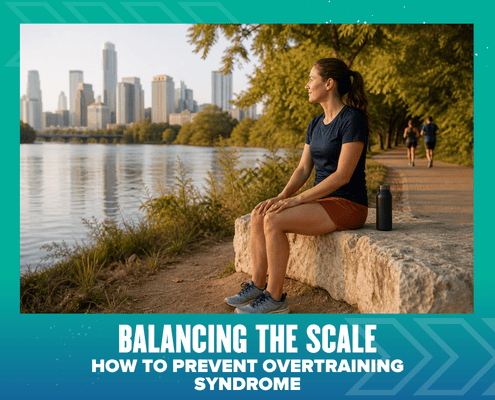
Balancing the Scale: How to Prevent Overtraining Syndrome
A long run can leave you tired. When that fatigue follows you into the next workout, then the next, it’s time to reconsider the plan.
As you prepare for the Austin Marathon, more training isn’t always better training. Long runs and faster workouts need enough recovery between them. Without it, you may find yourself working harder while your performance gets worse.
To reduce your risk of overtraining syndrome, increase training gradually, alternate demanding sessions with easier days, schedule rest, and support your running with adequate food and sleep. Persistent fatigue or declining performance calls for a training adjustment and medical advice, not another hard workout.
 What Is Overtraining Syndrome?
 What Is Overtraining Syndrome?
Overtraining syndrome is a condition in which prolonged training stress and inadequate recovery lead to a sustained drop in performance, often alongside physical and psychological symptoms.
It isn’t the same as feeling sore after a demanding run. The Hospital for Special Surgery distinguishes short-term overreaching, which can improve with rest, from overtraining, which can require a much longer recovery.
Fatigue alone doesn’t confirm either condition. According to the Cleveland Clinic, there is no single test for overtraining syndrome. A healthcare professional evaluates symptoms, training habits, and other possible causes.
What Are the Signs of Overtraining in Runners?
 What Are the Signs of Overtraining in Runners?
Warning signs include persistent fatigue, declining performance, unusually heavy legs, poor sleep, and changes in mood or motivation. Look for a pattern across workouts and daily life, not just one disappointing run.
HSS identifies symptoms such as:
- Difficulty completing workouts that previously felt manageable.
- Unusual soreness or heavy legs that persist between sessions.
- Performance that stalls or declines.
- Ongoing tiredness outside of training.
- Poor-quality sleep.
- Irritability, low mood, or reduced motivation.
- More frequent illness.
- Changes in appetite, weight, or menstrual cycles.
These symptoms can have other causes. Don’t assume they’re simply part of marathon training, and don’t use a checklist to diagnose yourself.
How Much Marathon Training Fatigue Is Normal?
 How Much Marathon Training Fatigue Is Normal?
Some fatigue after a challenging workout is expected. The more useful question is whether you’re recovering before the next session.
If rest helps your energy return and your usual workouts feel manageable again, that differs from repeatedly starting runs exhausted. Fatigue that persists alongside worsening performance, disrupted sleep, or mood changes deserves attention.
You don’t need to wait until you can’t finish a run to ask for help.
How Can You Reduce Your Risk of Overtraining?
 How Can You Reduce Your Risk of Overtraining?
1. Increase Training Gradually
Build your training around your current fitness and experience, rather than the mileage you wish you could handle.
HSS recommends gradually increasing training volume and intensity. Avoid sudden jumps or treating every week as an opportunity to do more.
If you miss a workout, discuss any changes with your coach rather than automatically stacking demanding sessions together. The schedule should leave room to recover, not just room to fit in more running.
2. Separate Hard Sessions With Easier Days
Alternate hard and easy training days instead of repeatedly asking your body for another demanding effort.
Consider your whole exercise schedule, too. A strenuous cycling session or strength workout still adds work, even if it doesn’t appear in your running mileage.
The point of an easier day is to reduce the demand. Swapping one hard workout for another doesn’t accomplish that.
3. Schedule Rest Before You Feel Worn Out
Rest day importance comes down to a practical point: you need time to recover from the training you’ve already completed.
HSS recommends at least one complete rest day each week. Treat that as general guidance, not a rule that means one day will always be enough. Your health, training demands, and recovery may call for more.
Protect those days in your calendar. If you’re struggling to recover between sessions, reassess the plan rather than waiting for your next scheduled break.
For more on planning downtime, read The Importance of Rest: How Recovery Days Enhance Marathon Training.
4. Eat Enough to Support Training and Recovery
Recovery requires adequate energy and nutrients. HSS recommends making sure your intake supports both training and muscle repair.
Give meals and snacks a place in your training routine rather than treating them as an afterthought. If your training demands change, your nutrition may need attention, too.
A registered sports dietitian can help you assess your intake and build a practical fueling plan, especially if you’re experiencing ongoing fatigue or struggling to eat enough.
5. Account for Sleep and Stress
Your training plan doesn’t exist separately from the rest of your life. HSS identifies sleep, nutrition, and mental well-being as important parts of preventing overtraining.
If work, travel, or other responsibilities are disrupting sleep and increasing stress, discuss adjusting your training load with your coach.
Keep brief notes about your sleep, energy, soreness, mood, and workout difficulty. Reviewing those notes alongside your mileage can help you notice when you’re no longer recovering well.
What Should You Do If You Suspect Overtraining Syndrome?
 What Should You Do If You Suspect Overtraining Syndrome?
Stop trying to solve worsening performance with harder workouts. Speak with a healthcare professional about persistent fatigue, pain, mood changes, or difficulty recovering.
Bring your training log and explain when symptoms started. Details about recent training changes, sleep, nutrition, and stress can help your provider assess what’s happening and consider other causes.
Treatment may involve reducing training substantially or stopping temporarily. Cleveland Clinic notes that recovery can take weeks to months or longer, depending on severity.
If overtraining syndrome is diagnosed, work with your healthcare provider and coach on a gradual return. Don’t use an approaching race date as the measure of whether you’re ready.
Frequently Asked Questions
Can recreational runners develop overtraining syndrome?
Yes. It isn’t limited to elite athletes. Training demands that repeatedly exceed your ability to recover can become a problem at any experience level.
How many rest days should marathon runners take?
HSS recommends at least one full rest day weekly as general guidance. Some runners need more, and persistent symptoms may require a larger reduction in training under medical supervision.
Is cross-training the same as resting?
No. Cross-training changes the activity, but it can still be demanding exercise. An intense bike ride or gym session shouldn’t be counted as a full rest day.
Can one weekend off fix overtraining syndrome?
A short break may help ordinary training fatigue, but diagnosed overtraining syndrome can require weeks or months of recovery. The appropriate timeline depends on the individual and should be guided by a healthcare professional.
Make Recovery Part of Your Austin Marathon Plan
Before your next training week, review more than the mileage. Check where your rest days fall, whether you’re recovering between hard sessions, and whether your schedule leaves time to eat and sleep adequately.
If fatigue keeps carrying into the next workout, change the plan and seek advice. Preparing for the Austin Marathon shouldn’t mean ignoring symptoms to complete the calendar.
This article provides general education, not a diagnosis or individualized medical advice. Consult a qualified healthcare professional about persistent fatigue, pain, or other concerning symptoms.


