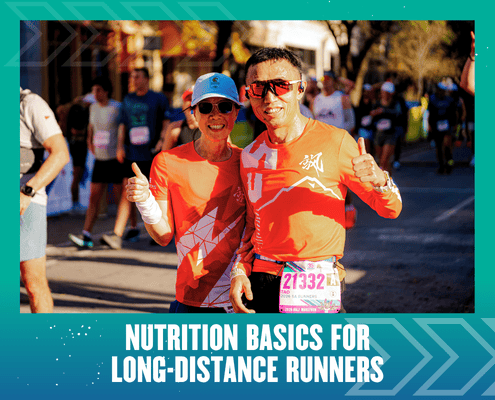
Nutrition Basics for Long-Distance Runners
Training for a long-distance race like the Austin Marathon is not just about logging miles; it is also about fueling your body so you can adapt, recover, and perform on race day. The right nutrition strategy helps you train consistently, avoid bonking, and feel stronger during long runs.
This guide breaks down the basics of long-distance runner nutrition in a simple, practical way: what to eat day-to-day, how to fuel long runs, and how to handle hydration and electrolytes in Texas conditions.
Long-distance runners should prioritize carbohydrates for energy, adequate protein for recovery, and consistent hydration with electrolytes for endurance. For long runs, aim for 30 to 60 grams of carbs per hour (up to 90g/hour if trained), start fueling early, and practice your plan before race day.
 Why Nutrition Matters More as Distance Increases
 Why Nutrition Matters More as Distance Increases
As you move from short runs to half marathon and marathon distances, your biggest limiter often becomes energy availability. Your body stores carbohydrate as glycogen, but those stores are limited. When glycogen gets low, pace feels harder, your form breaks down, and fatigue spikes.
Smart fueling helps you:
- Maintain steadier energy on long runs
- Recover faster so you can train again
- Reduce GI issues by practicing a consistent plan
- Support immune function during peak training
The 3 Foundations: Carbs, Protein, and Fats
 The 3 Foundations: Carbs, Protein, and Fats
1) Carbohydrates (your primary endurance fuel)
Carbs are the main energy source during running, especially at marathon pace and faster.
Runner-friendly carb sources:
- Oats, rice, pasta, potatoes, bread, tortillas
- Fruit, applesauce, dried fruit
- Yogurt + granola
- Sports drinks, gels, chews during long runs
Simple rule: If your training volume is increasing, carbs should increase too.
2) Protein (recovery, muscle repair, and resilience)
 2) Protein (recovery, muscle repair, and resilience)
Protein helps repair muscle tissue and supports training adaptation. It is especially important when your long runs and workouts stack up.
Easy protein options:
- Eggs, Greek yogurt, cottage cheese
- Chicken, turkey, fish, lean beef
- Tofu, tempeh, beans, lentils
- Protein smoothies (great post-run)
Practical target: Include protein at most meals and snacks, especially after running.
3) Fats (hormone health and long-term energy)
 3) Fats (hormone health and long-term energy)
Fats support overall health and help you stay satisfied between meals. They are not the best “quick fuel” mid-run, but they matter in your daily diet.
Healthy fat sources:
- Avocado, olive oil, nuts, nut butters
- Chia/flax seeds, fatty fish (salmon)
Hydration and Electrolytes (Especially for Austin)
 Hydration and Electrolytes (Especially for Austin)
Austin training often means warm mornings and humid conditions. Hydration is not only about water; sodium and electrolytes are critical to keep fluids moving and reduce cramping risk.
Hydration basics
- Drink regularly throughout the day (not just around runs).
- Check urine color: pale yellow is a good sign you are hydrated.
- Weigh yourself before and after long runs occasionally to estimate sweat loss.
Electrolyte basics
Electrolytes (especially sodium) support fluid balance and help you absorb what you drink.
When electrolytes matter most:
- Runs longer than 60 to 75 minutes
- Hot or humid days
- Heavy sweaters or salty sweaters (white streaks on clothes)
Simple approach: Pair water with an electrolyte drink or add electrolytes during longer/hotter sessions.
What to Eat Before a Run
 What to Eat Before a Run
Your pre-run nutrition should be carb-focused and easy to digest.
Before short runs (under 60 minutes)
Many runners do fine with:
- A small snack (banana, toast, or a few crackers), or
- Nothing at all if it is truly easy and early
Before long runs or workouts
Aim for carbs plus a little protein, low fiber, low fat.
Examples (60 to 120 minutes before):
- Bagel with honey or jam
- Oatmeal with banana
- Toast + peanut butter (if tolerated)
- Yogurt + fruit
If you run very early, a smaller “starter snack” is fine:
- Half banana + a few sips of sports drink
- Applesauce pouch
- A small granola bar
How to Fuel During Long Runs (The Key to Marathon Success)
 How to Fuel During Long Runs (The Key to Marathon Success)
If you take one lesson from this post, make it this: practice fueling during training, not just on race day.
Carb targets during long runs
General guidelines:
- 30 to 60 grams of carbs per hour for most runners
- Up to 90 grams per hour for advanced runners who train their gut (often using multiple carb types)
Timing
- Start fueling early (around 20 to 30 minutes in)
- Continue consistently (every 20 to 30 minutes)
Fuel options
- Gels or chews
- Sports drink with carbs
- Gummies, bananas, dates (if your stomach handles them)
Pro tip: Use long runs to test brands, flavors, and timing so you know exactly what works for you.
What to Eat After a Run (Recovery That Actually Helps)
 What to Eat After a Run (Recovery That Actually Helps)
Post-run nutrition supports recovery so you can show up for the next run.
Aim for:
- Carbs to refill glycogen
- Protein to rebuild muscle
- Fluids and sodium to rehydrate
Easy post-run options:
- Chocolate milk or a smoothie
- Rice bowl with chicken/tofu and veggies
- Yogurt + granola + fruit
- Sandwich + fruit + electrolyte drink
If you are not hungry immediately, start with something small (like a smoothie) and eat a full meal later.
Common Nutrition Mistakes Long-Distance Runners Make
 Common Nutrition Mistakes Long-Distance Runners Make
- Not eating enough carbs for the training load
- Waiting too long to fuel during long runs
- Only drinking water on hot long runs (missing sodium)
- Trying new gels or foods on race day
- Overdoing fiber and fat right before running (GI trouble)
Austin Marathon Race-Week and Race-Day Basics
 Austin Marathon Race-Week and Race-Day Basics
Race week
- Keep meals familiar.
- Increase carbs modestly as mileage drops (you do not need to overstuff).
- Keep hydration consistent and include electrolytes if it is warm.
Race morning
- Eat a familiar carb-focused breakfast 2 to 3 hours before start.
- Sip water and/or electrolyte drink.
- Bring or plan your on-course fueling strategy.
During the race
- Fuel early and consistently.
- Do not wait until you feel tired to take carbs.
FAQ
 FAQ
FAQHow many carbs should I eat during a long run?
Most runners should aim for 30 to 60 grams of carbs per hour. Advanced runners may tolerate up to 90 grams per hour with practice.
What is the best pre-run breakfast for long-distance runners?
A good pre-run breakfast is carb-focused, low fiber, and low fat, such as oatmeal with banana, a bagel with honey, or toast with jam.
Do marathon runners need electrolytes?
Many do, especially during hot, humid, or long runs. Electrolytes (especially sodium) help maintain fluid balance and support hydration.
What should I eat after a long run?
Eat carbs plus protein and rehydrate. A smoothie, chocolate milk, rice bowl, or yogurt with granola are easy, effective choices.
Final Takeaway
Nutrition does not need to be complicated, but it does need to be consistent. Build your long-distance running nutrition plan around carbs for energy, protein for recovery, and hydration with electrolytes for endurance. Then practice it in training so race day feels predictable.
If you are training for the Austin Marathon, start now: pick a fuel you like, test it on long runs, and refine your routine week by week.