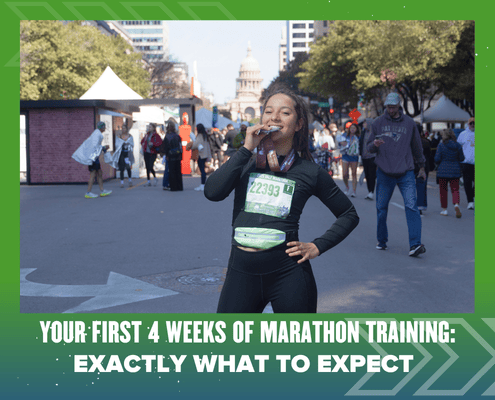
Your First 4 Weeks of Marathon Training: Exactly What to Expect
You signed up. You told your friends. Maybe you bought new shoes. Now what?
The first month of marathon training is where the magic (and the uncertainty) begins. Whether you’re training for your first Austin Marathon or your first marathon anywhere, the early weeks set the tone for everything that follows. Here’s exactly what to expect so you can ditch the guesswork and focus on showing up.
Week 1: It’s About Showing Up, Not Showing Off
Your first week isn’t about speed, distance, or proving anything. It’s about building the habit.
What it looks like:
- 3–4 easy runs (20–30 minutes each)
- 1–2 rest or cross-training days (walking, yoga, swimming)
- Total weekly mileage: 8–12 miles
What to expect: You’ll feel excited, maybe a little sore, and probably tempted to do more. Don’t. The number one mistake new marathon runners make is starting too fast and too far. Your body needs time to adapt to the repetitive impact, and your joints, tendons, and muscles are all adjusting behind the scenes.
Pro tip: Run at a conversational pace. If you can’t hold a sentence without gasping, slow down. Yes, really.
Week 2: The Honeymoon Glow (With a Side of Soreness)
By week two, you’re settling into a rhythm. Your body is starting to recognize the pattern: run, recover, repeat.
What it looks like:
- 3–4 runs (add 5–10 minutes to your longest run)
- 1 slightly longer “weekend run” (35–45 minutes)
- Total weekly mileage: 10–15 miles
What to expect: Some muscle soreness is normal, especially in your calves, quads, and hips. This is your body adapting, not breaking down. You might also notice your sleep improving and your energy levels stabilizing. That’s the runner’s reward kicking in early.
Pro tip: Invest in a foam roller now. Your future self (especially around week 12) will thank you.
Week 3: The Mental Test
Here’s where it gets real. The novelty has worn off, but the payoff hasn’t fully arrived yet. Week three is where most beginners either lock in or start skipping days.
What it looks like:
- 4 runs (including one slightly faster “tempo-ish” effort)
- 1 long run (45–55 minutes at easy pace)
- Total weekly mileage: 12–17 miles
What to expect: You’ll have a bad run. Maybe your legs feel heavy, or you just don’t want to go. This is 100% normal. The runners who finish marathons aren’t the ones who never have bad days; they’re the ones who lace up anyway.
You may also start noticing changes in your appetite. Your body is burning more fuel, so eat accordingly. This isn’t the time to restrict calories.
Pro tip: Find a running buddy or join a local Austin running group. Accountability makes week three survivable.
Week 4: You’re a Runner Now
Four weeks in, something shifts. The runs feel less foreign. You know your route, your pace, your pre-run routine. You’ve built a foundation, and your body is starting to show it.
What it looks like:
- 4 runs (mix of easy and moderate effort)
- 1 long run (50–60 minutes)
- Total weekly mileage: 14–20 miles
What to expect: This is your first “step-back” opportunity. Many training plans reduce mileage slightly every 3–4 weeks to let your body consolidate gains. If your plan calls for it, honor the rest. Recovery is where fitness actually happens.
You’ll also start thinking more about gear, nutrition, and race-day logistics. That’s a good sign. It means you’ve moved past “Can I do this?” and into “How do I do this well?”
Pro tip: Start experimenting with mid-run fuel (gels, chews, or real food) on your long runs now. Don’t wait until race day to find out what your stomach tolerates.
What You DON’T Need to Worry About Yet
- Speed work: Not yet. Build the aerobic base first.
- Race pace: You’ll dial that in later. For now, easy effort is your best friend.
- Mileage comparisons: Someone on Instagram running 50-mile weeks in month one is either lying or heading for injury. Run your own race.
The Austin Marathon Advantage
Training for the Austin Marathon means you’re not doing this alone. With 30,000+ runners, a massive local running community, and race-day energy from 100,000+ spectators and 20+ live bands, you’re building toward something special. The first four weeks are just the beginning.
Need a training plan? Check out the official Austin Marathon training resources and connect with local running groups who train together year-round.
FAQ: First 4 Weeks of Marathon Training
How many days a week should a beginner run when starting marathon training?
Most beginner marathon plans start with 3–4 running days per week, with rest or cross-training on the other days. This gives your body time to adapt to the impact of running while building aerobic fitness gradually.
How far should I run in my first week of marathon training?
In week one, aim for 8–12 total miles spread across 3–4 easy runs of 20–30 minutes each. The focus should be on consistency and comfortable effort, not distance or speed.
Is it normal to be sore during the first month of marathon training?
Yes. Mild muscle soreness, especially in your calves, quads, and hips, is a normal sign that your body is adapting. Sharp or persistent pain, however, should be evaluated by a professional.
What pace should I run during early marathon training?
Run at a conversational pace, meaning you could hold a full sentence without gasping. For most beginners, this feels surprisingly slow, but it builds your aerobic base safely and effectively.
When should I start doing long runs in marathon training?
Most plans introduce a slightly longer run in week 2 or 3, starting around 35–55 minutes. These build gradually throughout training and peak several weeks before race day.
How do I stay motivated in the first month of training?
Join a running group, sign up for a training plan with built-in accountability, and remind yourself why you registered. The first month is the hardest mentally because the payoff (race day) feels far away. Focus on small weekly wins.
What should I eat during the first weeks of marathon training?
Focus on balanced meals with carbohydrates for fuel, protein for muscle repair, and healthy fats. As your mileage increases, your calorie needs will too. Don’t restrict food during training.