What Heat Training Does for Your Endurance (And Why It’s a Secret Weapon for February)
If you’re registered for the 2027 Austin Marathon on February 14, you might think of summer heat as the enemy. Triple-digit temps, dripping humidity, and runs that feel twice as hard as they should.
But here’s the thing most runners don’t realize: training through the Texas heat doesn’t just toughen you up mentally. It triggers real, measurable physiological changes that make you a stronger, more efficient runner when the temps finally drop on race day.
Heat training is one of the best-kept secrets in endurance sports, and if you’re logging miles this summer in Austin, you’re already doing it.
 What Is Heat Training?
 What Is Heat Training?
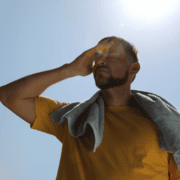
Heat training (also called heat acclimation) is the process of exercising in hot conditions repeatedly over days or weeks, prompting your body to adapt to thermal stress. These adaptations don’t just help you survive the heat. They make you faster and more efficient in any temperature, including the 44–65°F range you’ll likely see on race morning in February.
How Heat Training Improves Your Endurance
 How Heat Training Improves Your Endurance
Here’s what happens inside your body when you train consistently in the heat:
1. Increased Plasma Volume
Your body responds to heat stress by expanding your blood plasma volume. More plasma means more blood available to deliver oxygen to working muscles and cool your skin at the same time. The result? Lower heart rate at the same pace, and better cardiac output when you push hard.
2. Lower Resting and Exercising Core Temperature
After just 7–14 days of heat exposure, your baseline core temperature drops and you begin sweating earlier and more efficiently. On a cool February morning, this means your thermoregulation system has extra capacity, keeping you comfortable longer into the race.
3. Improved VO2max
Research published in The Journal of Physiology (2025) found that long-term heat acclimation enhanced maximal oxygen consumption via increases in hemoglobin mass and improved cardiac function. More oxygen uptake = more aerobic power on race day.
4. Reduced Carbohydrate Burn
A 2025 study in Frontiers in Physiology showed that four weeks of heat acclimation lowered carbohydrate oxidation during submaximal running. Translation: your body gets better at sparing glycogen and burning fat, which is exactly what you want during a 26.2-mile effort.
5. Lower Perceived Effort
Heat-adapted runners consistently report that exercise at a given pace feels easier after acclimation. When temperatures drop in the fall and winter, paces that felt brutal in July suddenly feel smooth.
Why Summer Heat Training Is a Secret Weapon for a February Marathon
 Why Summer Heat Training Is a Secret Weapon for a February Marathon
The Austin Marathon takes place in mid-February, and most runners begin structured training plans in the fall. But the aerobic base you build through a hot Texas summer carries forward:
- Expanded blood volume persists for weeks after heat exposure ends, giving your fall training a higher starting point.
- Improved efficiency means your fall tempo runs and long runs produce better fitness at the same effort.
- Mental resilience from surviving summer miles translates directly to the final miles of a marathon when everything hurts.
Think of summer heat training as a free altitude camp, without the travel. You’re stressing your cardiovascular system in a way that forces adaptation, and those adaptations pay dividends when conditions are ideal on race day.
How to Heat Train Safely This Summer
 How to Heat Train Safely This Summer
You don’t need a sauna or a special protocol. If you live in Austin and run outside between June and September, you’re already heat training. Here’s how to do it intentionally:
Go easy on effort. Run by feel, not pace. Your heart rate will be elevated in the heat, so what feels like an easy effort is the correct effort, even if it’s 30–60 seconds per mile slower than normal.
Stay consistent. Adaptations begin in as few as 5 sessions and become more robust after 10–14 days of consistent heat exposure. Don’t skip runs just because it’s hot. Adjust, but show up.
Hydrate aggressively. Drink water throughout the day, not just around your run. Add electrolytes when sessions exceed 60 minutes or when humidity is extreme.
Run early or late. You don’t have to run at peak sun to get heat benefits. Early morning runs in Austin still deliver temps in the 75–85°F range during summer, which is plenty for adaptation.
Listen to your body. Dizziness, nausea, or confusion are signs to stop immediately. Heat training works because of gradual adaptation, not by pushing through danger.
The Bottom Line
 The Bottom Line
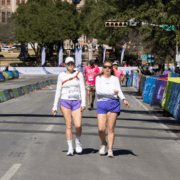
Austin summers are hot, but they’re also an opportunity. Every hot mile you log between now and fall is quietly building a faster, more resilient version of yourself. When you toe the line on Congress Avenue in February, you’ll have months of heat-forged fitness working in your favor.
The runners who train through the heat don’t just survive summer. They show up to race day with a physiological edge that cooler-climate runners can’t match.
Your secret weapon isn’t a new shoe or a fancy training plan. It’s the Texas sun.
FAQs: Heat Training for Marathon Runners
Does heat training actually make you faster?
Yes. Studies show heat acclimation improves performance in both hot and cool conditions by increasing plasma volume, improving cardiac efficiency, and reducing perceived effort at the same pace.
How long does it take for heat training to work?
Most runners notice initial adaptations within 5–7 days of consistent heat exposure. More complete adaptation occurs after 10–14 days. Benefits continue to build over 4+ weeks.
Will heat training help me on a cool race day?
Absolutely. The cardiovascular and metabolic adaptations from heat training transfer directly to cooler temperatures, often resulting in lower heart rates and faster sustainable paces.
Do I need a sauna for heat training?
No. Running outdoors in summer heat is effective heat training. Saunas can supplement if you want additional passive heat exposure, but outdoor running in Austin’s summer provides more than enough thermal stress.
Is heat training safe?
Yes, when done gradually. Run by effort (not pace), hydrate well, and avoid running during the hottest hours if you’re new to summer training. Stop immediately if you feel dizzy, nauseated, or disoriented.
Ready to put your summer training to the test? Register for the 2027 Austin Marathon and join 30,000 runners on February 14 for the running social event of the year.
Suggested blog: